
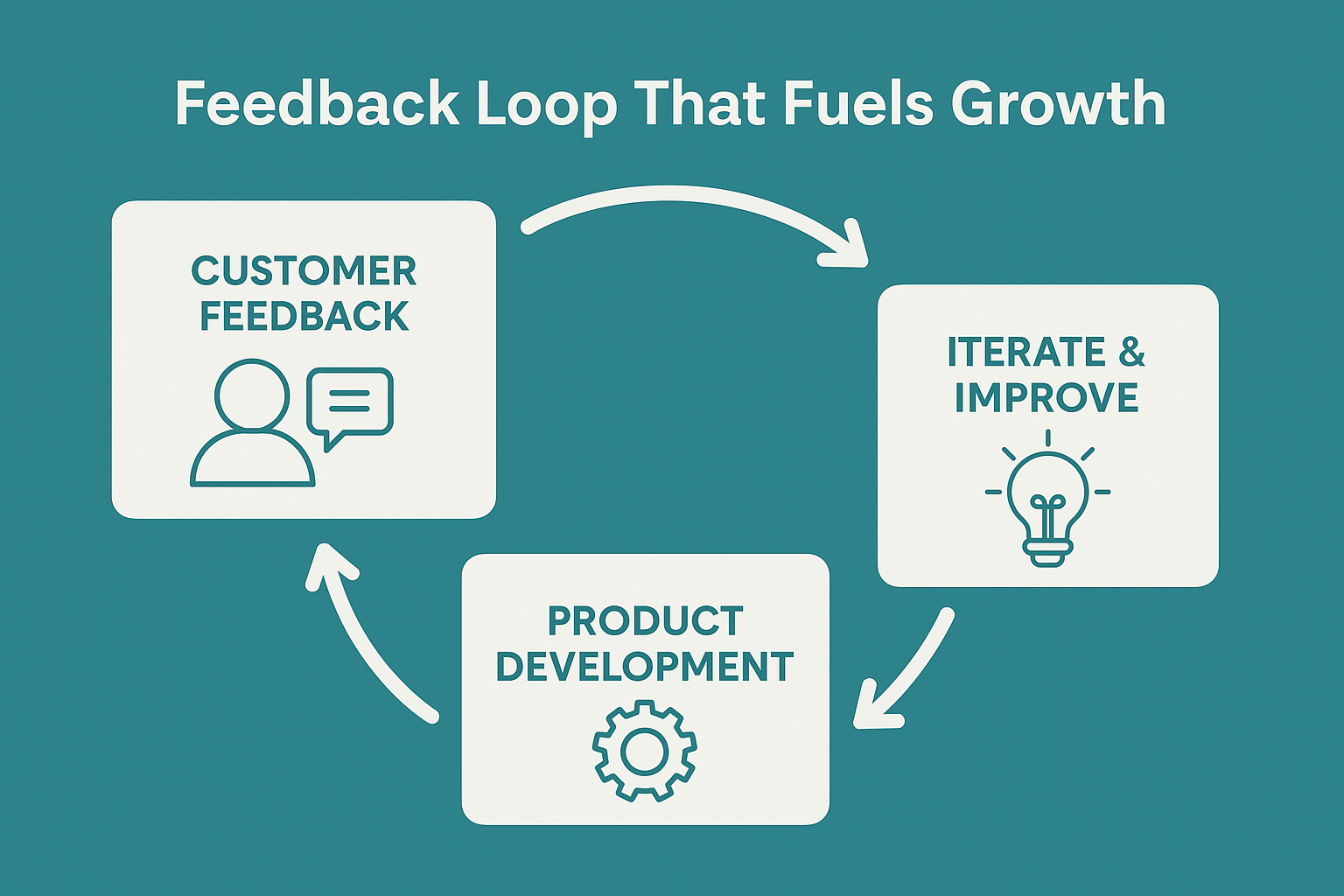

When we talk about growth in EdTech, most conversations center on customer acquisition, conversion rates, or pipeline velocity. And while those are important, there's a less glamorous—but incredibly powerful—driver of sustainable revenue growth: the feedback loop between your product and your customer-facing teams.
In fast-moving EdTech companies, product teams are sprinting to ship features, sales teams are hustling to close deals, and customer success teams are busy onboarding and supporting users. But when those teams operate in silos, valuable insights never make it back to where they’re most needed: the roadmap.
The truth is, many growth challenges are actually product challenges in disguise. And solving them starts by building a better loop between the people who build your product—and the people who sell, support, and market it.
Why Feedback Fuels Growth
In EdTech, your product isn’t just a piece of software—it’s the experience, the promise, and ultimately the value you deliver. When your product misses the mark—even slightly—it affects everything downstream:
A tight feedback loop helps ensure your product is evolving in the right direction, solving the right problems, and creating the kind of value that fuels growth. It’s how you close the gap between what you think users need and what they actually want.
Where the Disconnect Happens
Even in well-intentioned organizations, product teams often operate one or two steps removed from the customer. Feedback from sales calls, support tickets, or onboarding conversations may eventually trickle in—but it’s inconsistent, anecdotal, and rarely tied to business impact.
This disconnect creates risk. You might be building features no one asked for, optimizing flows that aren’t broken, or ignoring friction points that are actively slowing your growth.
Worse, when customer-facing teams feel unheard, they stop sharing feedback altogether—and your product starts to drift away from your market.
What a High-Functioning Feedback Loop Looks Like
Creating a productive loop between product and revenue teams doesn’t mean reacting to every feature request or flooding your roadmap with edge cases. It means building a system to collect, prioritize, and act on insights that move the business forward.
Here’s what that looks like:
Real Examples of Feedback in Action
At one EdTech company I worked with, the product team was unaware that a confusing onboarding flow was causing a significant drop-off after free trial signups. Customer success flagged it multiple times, but it wasn’t until marketing shared survey data—and sales showed that it was impacting conversion—that the issue got prioritized. Once addressed, trial-to-paid conversion jumped by 22%.
In another case, a subtle change in language on a dashboard—recommended by a customer support rep—led to a measurable increase in user retention. The fix was simple. The impact was huge.
These wins aren’t rare. They’re just hidden in conversations that often go undocumented, unshared, and unprioritized.
How to Start Building the Loop
If you're in growth, partnerships, or marketing, you don’t need to be in product to kickstart this. You just need to be the bridge.
Here’s how to get started:
Feedback is Fuel for Revenue
In EdTech, growth doesn’t just come from doing more—it comes from doing the right things. And the best way to figure out what those are? Talk to your users. Listen to your teams. And make sure that insight doesn’t just sit in someone’s inbox—it gets back to the people building your product.
The companies that win aren’t just building features faster. They’re building the right features—because they’ve built the systems to listen, align, and act.
If your team is working to bridge product and revenue strategy and wants help creating the infrastructure or the strategy to do it, Edvance Marketing can help. Whether you need a roadmap, a partner to build the loop, or someone to help your teams align—we’re here for it.